Introduction
Your POS software might be costing your restaurant far more than it should. For Indian F&B business owners, the choice between a traditional POS system and a modern cloud-based Smart POS like Toyaja RestoMPOS is one of the most consequential technology decisions you will make in 2026.
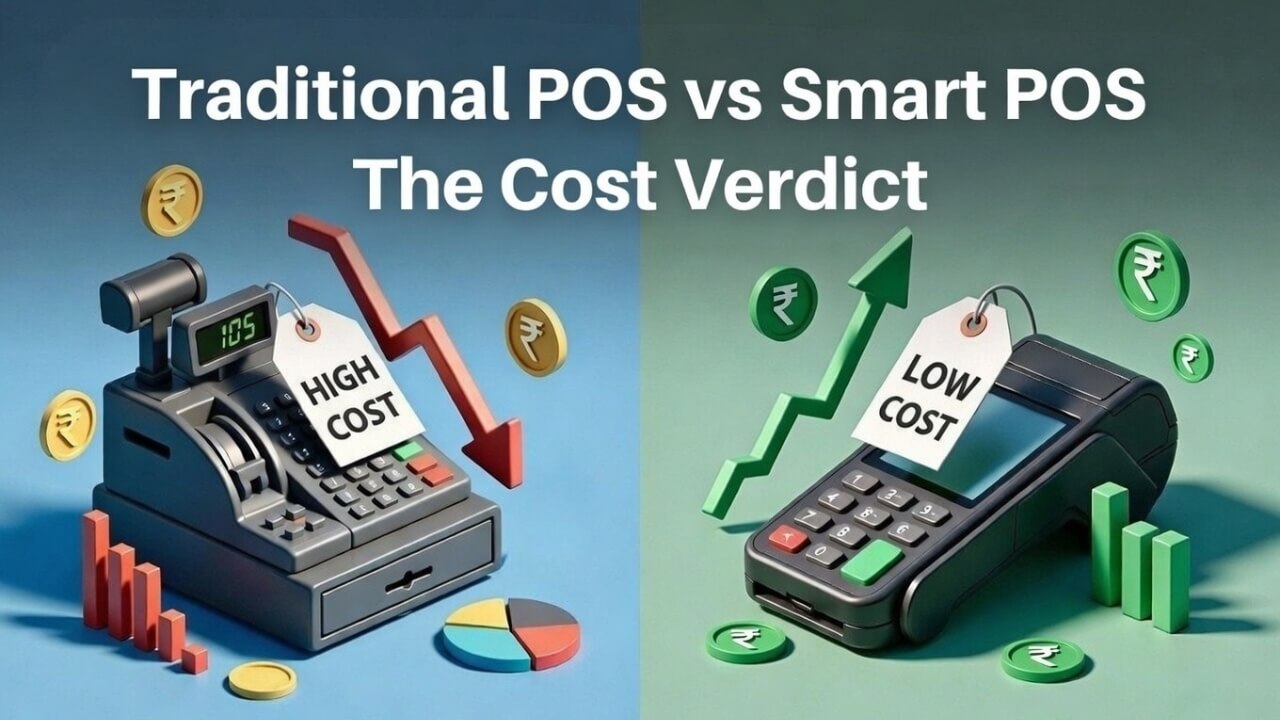
Traditional POS hardware in India can cost between ₹40,000 and ₹80,000 per terminal — and that is before accounting for Printer, server infrastructure, IT support, and downtime costs. The global cloud POS market tells a different story: it is set to grow from USD 4.70 billion in 2023 to USD 14.79 billion by 2030, at a strong CAGR of 18.2%. Indian restaurant owners are increasingly part of this shift.
Smart POS solutions like Toyaja RestoMPOS offer 60–80% lower initial costs, same-day setup, built-in UPI and digital payment support, GST-compliant billing, and real-time analytics — all in one mobile-first platform purpose-built for India’s F&B sector. This guide examines the cost differences between the two systems and tells you clearly which saves more money for your business in 2026 and beyond.
Cost Structure and Pricing Models
The pricing structures of traditional and smart POS systems reveal stark differences from day one. Traditional systems demand heavy upfront capital investment, while smart POS solutions like Toyaja RestoMPOS use flexible subscription or rental models that dramatically reduce initial outlay.Traditional POS: High Entry Costs
A single traditional POS terminal in India costs between ₹40,000 and ₹80,000. For a restaurant with two billing counters, that is ₹80,000 – ₹1,60,000 in hardware alone — before adding printer, server infrastructure , cabling, and annual maintenance contracts. These systems also carry an invisible ‘hardware depreciation tax’: the equipment loses value every year and will need replacement within 5–7 years.Toyaja RestoMPOS: Pay-as-You-Grow
RestoMPOS runs on affordable tablets and smartphones your team likely already owns, with a subscription that covers software, cloud hosting, updates, and support. Initial costs are 60–80% lower than traditional systems. Businesses can be live within hours, not the 3–5 days that conventional on-premise deployments require. This pay-as-you-transact model means you only scale spend when revenue grows.Hidden Costs Indian Owners Often Miss
- Hardware Maintenance: Traditional systems require costly on-site technician visits for every fault. RestoMPOS delivers automatic remote updates and cloud-side fixes — zero downtime, zero engineer fees.
- Training Costs: Traditional POS training for a small Indian team of 5–10 staff typically costs ₹17,000 – ₹85,000. RestoMPOS’s intuitive user friendly interface means new hires are productive after just one or two shifts.
- Scaling Costs: Opening a new outlet with traditional POS means another ₹1–1.5 lakh hardware outlay per location. With RestoMPOS, you activate a new outlet from the dashboard.
- UPI & Digital Payment Gaps: Traditional POS systems were not designed for India’s UPI ecosystem. Integrating Paytm, PhonePe, and Google Pay often costs extra. RestoMPOS supports all major UPI and digital payment modes natively.
Operational Efficiency and Time Savings
Beyond upfront costs, operational efficiency is where Toyaja RestoMPOS truly pulls ahead. India’s restaurant POS market is valued at over ₹1,299 billion and growing fast — driven by restaurant owners who need real-time control over busy, high-volume operations.Real-Time Access from Anywhere
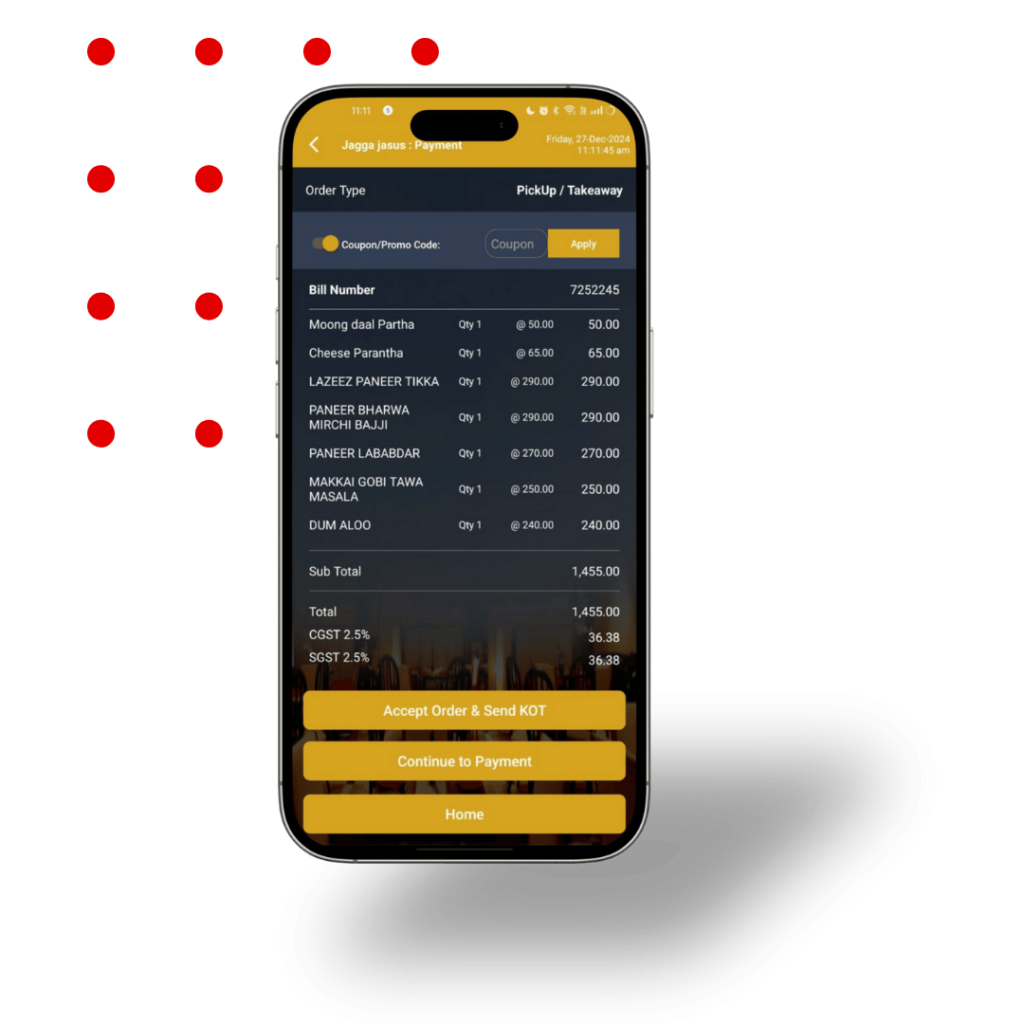
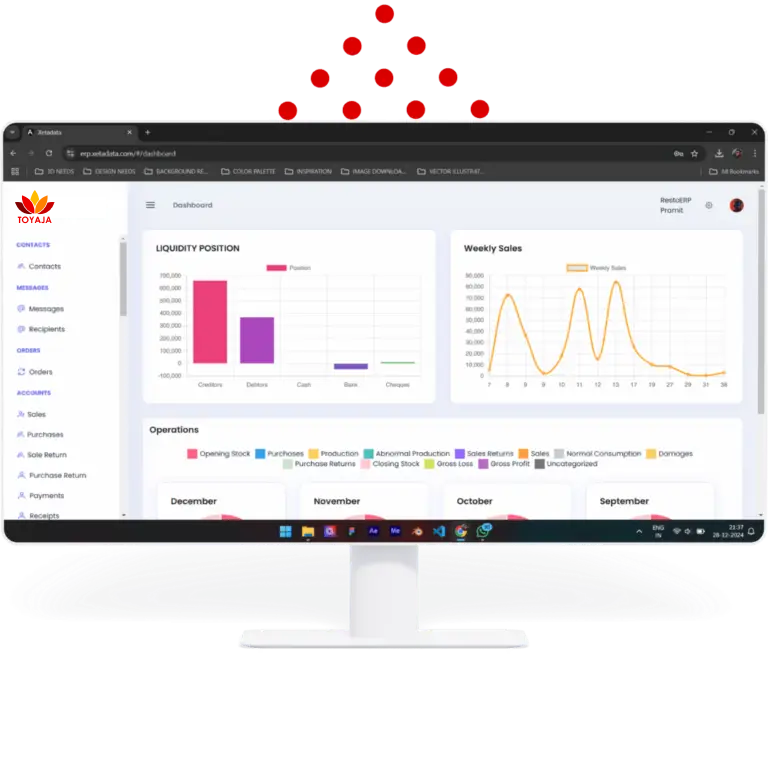
With RestoMPOS, business owners can track live sales, manage inventory, view table status, and process transactions from their mobile — whether they are at the restaurant, at home, or managing multiple outlets across cities. This remote capability has helped restaurants cut service times by 15% and boost customer satisfaction scores by 22% after implementation.Zero-Downtime Automatic Updates
Traditional POS systems require manual software upgrades — often involving a technician visit, service disruption, and data backup anxiety. RestoMPOS updates itself automatically on the cloud, overnight, with zero disruption to restaurant operations. Tax rate changes, menu price updates, and new feature rollouts happen seamlessly.Faster Staff Onboarding
High staff turnover is a reality in India’s F&B sector. With traditional POS, each new joiner requires hours of training and often makes costly billing errors in the first week. RestoMPOS’s simple, touch-based interface — available in English and regional language support — means new staff are operational after just one or two shifts. Some multi-outlet chains using RestoMPOS have eliminated formal POS training programmes entirely.Multi-Outlet Centralised Management
RestoMPOS’s centralised dashboard lets owners monitor inventory levels, labour costs, sales performance, and GST reports across all outlets simultaneously. This bird’s-eye view enables faster decisions — such as redistributing slow-moving stock between branches, or identifying which outlet’s peak hours need more staff coverage — that are simply not possible with siloed traditional systems.Long-Term Financial Impact
Security and Data Protection
Data breaches do more than erode customer trust — they can be business-ending. Research shows 60% of small businesses shut down within six months of a major cyberattack. RestoMPOS includes end-to-end encryption, automatic cloud backups, and role-based access controls as standard. Traditional POS systems often charge extra for security add-ons, and local server failures can result in permanent data loss.Equipment Lifespan and Depreciation
Traditional POS hardware carries a finite lifespan: billing terminals last 1–3 years, receipt printers around 5 years, and payment terminals just 3–5 years before security standards render them obsolete. Each replacement cycle means another large capital outlay. RestoMPOS runs on standard consumer tablets that are far cheaper to replace, with the software always up-to-date on the cloud regardless of the device age.Server Savings
Cloud-based RestoMPOS eliminates the need for on-premise servers entirely — saving Indian restaurant owners ₹40,000 to ₹80,000 in server hardware costs, plus ongoing electricity, cooling, and IT maintenance expenses. These savings are immediate and compound over the life of the business.Return on Investment
The numbers are clear. Modern smart POS systems pay for themselves within 9–24 months, with well-implemented deployments demonstrating approximately 50% return over three years. Toyaja RestoMPOS clients have reported recovering their full implementation cost within the first year through reduced waste, faster table turnover, and labour optimisation alone. As the business grows — more outlets, higher volumes, new menu categories — RestoMPOS scales with minimal additional cost, unlike traditional systems that demand proportional hardware investment at every stage.Head-to-Head Comparison: Traditional POS vs Toyaja RestoMPOS
The table below summarises the key differences across cost, operations, compliance, and scalability — tailored to India’s restaurant industry context.
| Aspect | Traditional POS | Toyaja RestoMPOS (Smart POS) |
|---|---|---|
| Initial Hardware Cost | ₹40,000 – ₹80,000 per terminal | 60–80% lower; mobile & tablet-based |
| Setup Time | 7–30 days; on-site technician required | Under 1 day; cloud-based activation |
| Maintenance | Expensive technician visits; manual updates | Remote automatic updates via cloud |
| Training Cost | ₹17,000 – ₹85,000 for small teams | Minimal or no charge; staff ready in 1–2 shifts |
| Server & IT Cost | ₹50,000 – ₹1,00,000 + ongoing upkeep | Zero — fully cloud-based |
| Payment Modes | Cards & cash only; no UPI integration | UPI, PhonePe, Paytm, GPay, card, cash |
| Equipment Lifespan | Terminals: 2–3 yrs; printers: 5 yrs | Runs on consumer tablets/phones |
| Pricing Model | Heavy upfront capital expenditure | Flexible subscription / rental model |
| Scaling to New Outlets | Large hardware investment per location | Minimal cost; activate via dashboard |
| ROI Timeline | Unclear; high depreciation | 18–24 months; ~50% return over 3 yrs |
| Remote Access | None or very limited | Live access from any device, anywhere |
| Reports & Analytics | Manual or limited built-in reports | Real-time dashboards, sales & GST reports |
| Inventory Management | Manual or add-on module | Integrated with RestoERP; auto alerts |
Conclusion: The Smart Choice for Indian Restaurants in 2026
The comparison is decisive. Traditional POS systems made sense when cloud infrastructure was unreliable and digital payments were rare in India. In 2026, neither of those conditions holds true. With UPI processing over 17 billion transactions monthly and GST compliance a non-negotiable requirement, Indian restaurant owners need a POS system built for today’s market — not one designed a decade ago.
Toyaja RestoMPOS delivers 60–80% lower initial costs, zero server overhead, built-in UPI and digital payment support, GST-compliant billing, real-time multi-outlet management, and a user interface your staff can master in a single shift. The ROI is measurable: businesses recover implementation costs in 9–24 months and see approximately 50% return over three years.
Beyond the numbers, the operational freedom matters too. Running your restaurant from your phone, knowing that your billing, inventory, loyalty, and reporting systems are all talking to each other in real time, is a competitive advantage that traditional POS simply cannot offer.
The cloud POS market will reach USD 14.79 billion by 2030. Indian restaurants that make the switch now will be better positioned for growth, compliance, and profitability than those still running on legacy hardware. Toyaja RestoMPOS — with 14+ years of exclusive F&B expertise and a client base spanning Tajmahal Hotel, Babai Bhojanam, Chai Lije, and Jaaju’s Kitchen & Bar — is the proven choice.